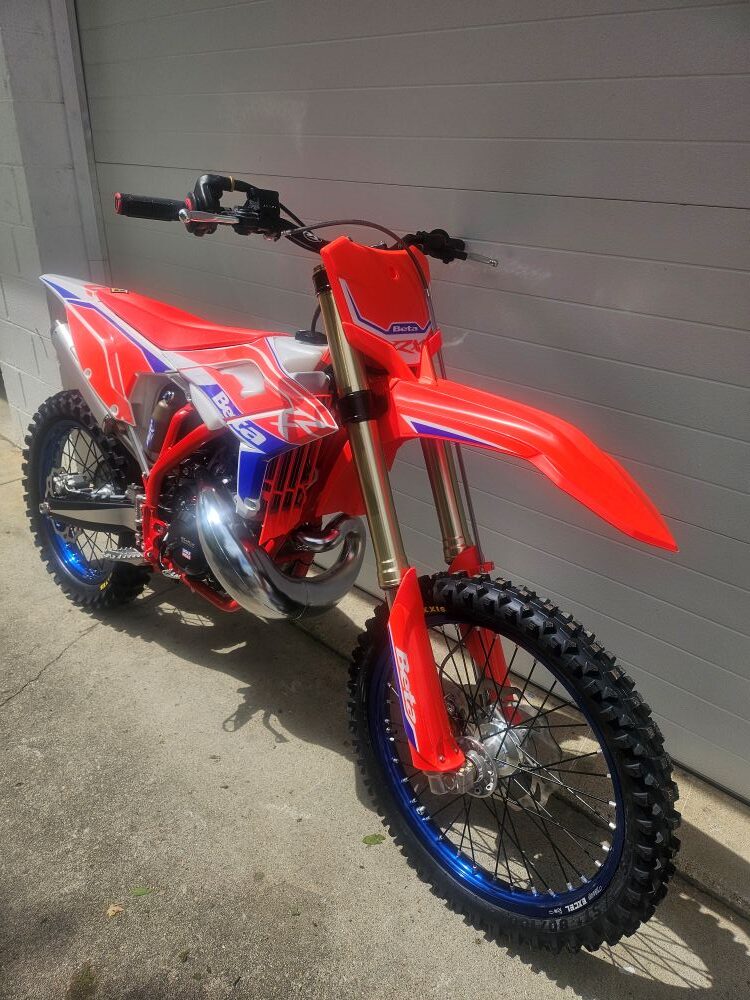
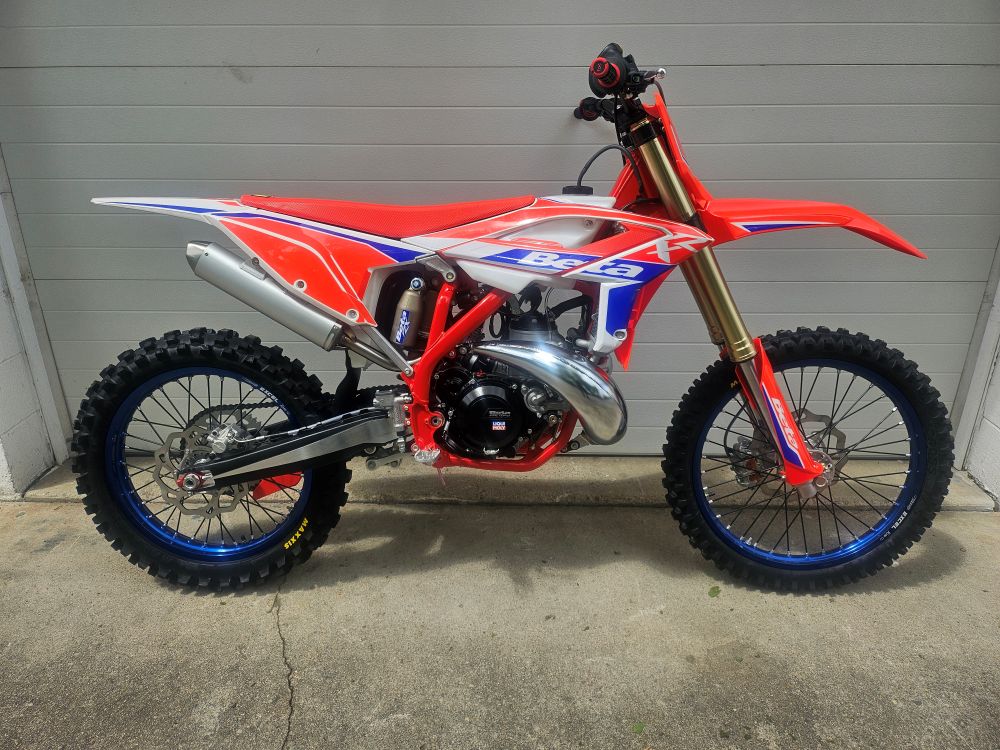
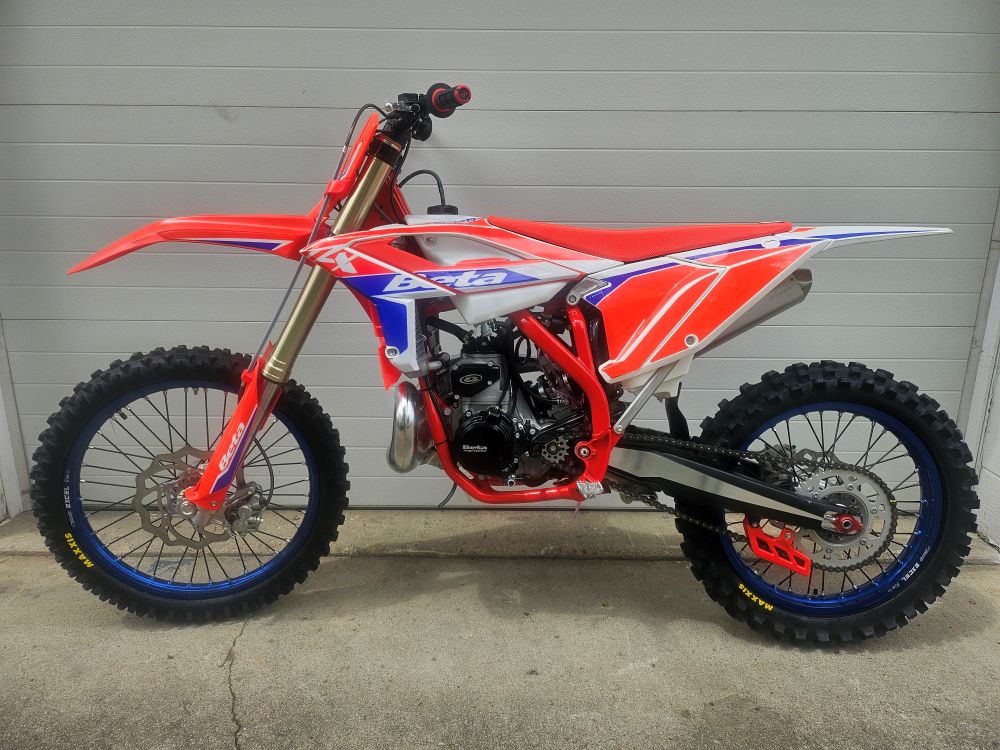
Description
Power Delivery and Engine Character
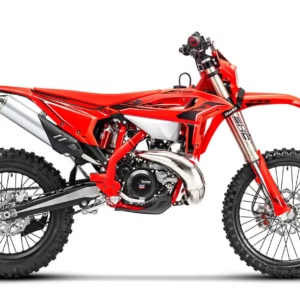
- Big-bore torque monster with smooth, linear output: The 350cc displacement (bored and stroked from the previous 300) delivers strong mid-range grunt and usable torque from low RPMs, without being overly aggressive or peaky. It feels “full-bodied” and progressive, letting you carry gears, lug in taller ratios, and pull out of mistakes easily—more like a 350/450 four-stroke in character than a typical high-revving 2T.
dirtbikemagazine.com
- Twin-spark (double spark plug) head: Exclusive to the 350, this improves combustion efficiency across the rev range for smoother power and better throttle response.
- Fun and exciting without being intimidating: It has that classic throaty two-stroke “BONG” sound and hit, but it’s described as rider-friendly for veterans and even accessible for those with limited 2T experience. Testers note it rewards riding in the meat of the powerband (mid-range monster) while still revving surprisingly well. Power is often around 48 hp with strong torque (e.g., ~32+ ft-lbs in tests), prioritizing usability over raw peak numbers.
motocrossactionmag.com
Rideability and Handling
- Agile yet planted chassis: Two-strokes generally feel lighter and more flickable than four-strokes. The 350 RX is stable on rough terrain, confident at speed, and less “flappy” than lighter 2Ts thanks to its balanced weight distribution and MX-tuned suspension (often KYB or Sachs setups depending on the exact variant). It shines in motocross, enduro, or woods riding with natural agility and good traction.
enduro21.com
- Beta’s signature “RideAbility”: The bike is engineered to be easy and fun for a wide range of riders—not just pros. Less physical stress, predictable handling, and the ability to exploit power without constant clutching/shifting.
Practical Advantages of the Two-Stroke Platform
- Simplicity and low maintenance: Pre-mix fuel, carbureted (Keihin) with mechanical power valve—no complex EFI or valves to worry about like on four-strokes. This means lower long-term costs, easier servicing, and reliability for high-hour recreational or race use (Beta emphasizes you can rack up hours without major hassle).
- Lightweight feel: Typically around 100 kg (claimed dry-ish weight), making it easier to maneuver than comparable 450 four-strokes while feeling more substantial/settled than smaller 250/300 2Ts.
- Strong components: Nissin brakes, quality suspension, and a stable chromoly frame contribute to confidence-inspiring stopping power and predictability.
Who It’s Great For
- Riders wanting two-stroke excitement (lightness, snap, sound, simplicity) with more usable power than a 300 2T—ideal for moto tracks, play riding, club racing, or technical trails.
- Those transitioning from or comparing to four-strokes: It offers similar torque and gear-carrying ability but with 2T benefits (quicker response, less weight/inertia, cheaper to maintain).
- Fans of “unique” bikes: It’s essentially a modern open-class 2T motocrosser, a category that had been dormant for years. Many call it “wicked fun,” “badass,” and one of the coolest new dirt bikes.
Owners and testers often say it’s a “mid-range monster” that’s smooth off the bottom, pulls hard when it hits, and stays manageable—perfect for grinning through hills, turns, or rough sections without wearing you out. It’s not the absolute highest-HP bike in its class, but the balance of power, handling, and ease makes it stand out for real-world riding.
Note that the RX is more MX-oriented (5-speed, track-focused suspension), while RR variants lean toward enduro/woods with different tuning. Real-world feel can vary with jetting, suspension setup, and rider skill—many recommend trying one if possible.If you’re comparing it to a specific model year, the RR 350 (4-stroke), or something else (like KTM/Husqvarna equivalents), let me know for more details!
Price does not include tax, title and freight charges.